
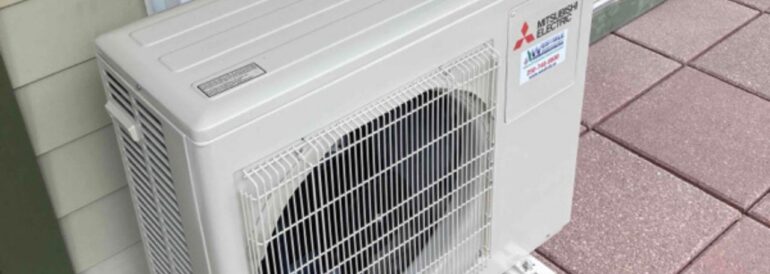
Noticing water around your heat pump can be alarming, but it doesn’t always signal a serious problem. In some cases, a small amount of moisture is completely normal. In others, it can point to an issue that needs attention before it causes damage to your system or your home.
This guide explains what’s normal, what’s not, and what to do when your heat pump is leaking water. If you’d like a professional to take a look, our heat pump service team is available across the Cowichan Valley and Vancouver Island.
Is Some Water Normal?
Yes – in certain situations, moisture around a heat pump is expected.
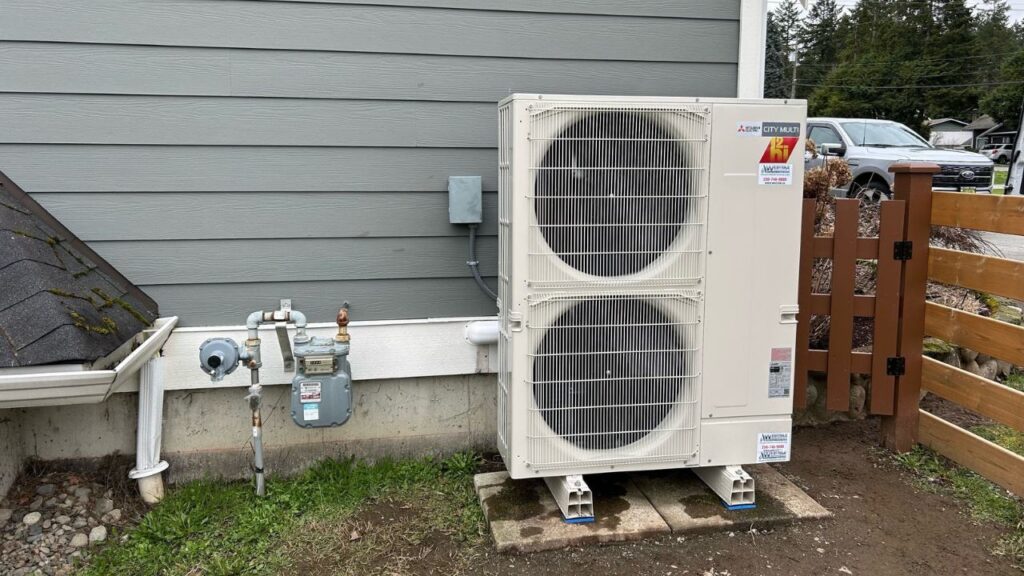
During heating mode, the outdoor unit pulls heat from the outside air. In cold or humid weather, frost and condensation can build up on the coils. Your heat pump has a built-in defrost cycle to manage this, and when it runs, you may see water dripping or pooling underneath the outdoor unit. This is normal.
In cooling mode, the indoor unit removes humidity from the air. That moisture collects in a drain pan and exits through a condensate drain line. A small amount of dripping near that drain is also nothing to worry about.
What isn’t normal is a steady stream of water, pooling inside your home, or water coming from a place it shouldn’t be.
Common Reasons a Heat Pump Is Leaking Water
If the moisture seems excessive or is showing up in the wrong places, one of these is likely the cause.
Blocked condensate drain line. This is the most common cause of indoor leaks. Over time, algae, dust, and debris can clog the drain line, causing water to back up and overflow the drain pan. It’s a relatively easy fix but needs prompt attention to avoid water damage.
Dirty air filter. A clogged filter restricts airflow over the evaporator coil. When airflow is too low, the coil can freeze – and when it thaws, it produces more water than the drain pan can handle.
Frozen evaporator coil. Related to the above, a frozen coil can result from low refrigerant levels, poor airflow, or running the system in very cold conditions. As it thaws, it can produce significant amounts of water.
Cracked or overflowing drain pan. The drain pan sits beneath the indoor unit to catch condensation. If it’s cracked, rusted through, or overwhelmed by a clog elsewhere, water will spill out.
Refrigerant leak. Low refrigerant can cause the evaporator coil to freeze and subsequently leak water as it melts. Refrigerant issues should always be handled by a licensed technician.
Improper installation or levelling. If the indoor or outdoor unit isn’t properly levelled, water may not drain correctly and can pool or leak in unexpected places. This is more common in ductless systems where the indoor unit is wall-mounted.
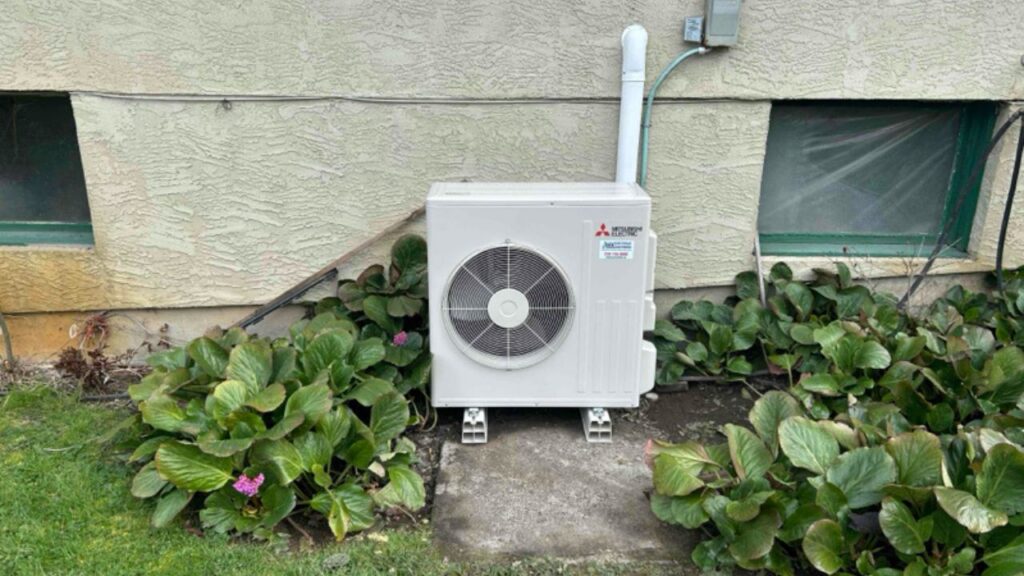
Outdoor unit drainage issues. If the area around your outdoor unit doesn’t drain well, water can pool beneath it – especially during the defrost cycle in winter. While some pooling is normal, standing water that doesn’t clear is worth monitoring.
What to Check Before Calling a Technician
A few simple checks can help you understand the situation before picking up the phone.
Look at your air filter. Pull it out and check the condition. If it’s heavily clogged, replace it and monitor whether the leak continues.
Check the drain pan. If you can safely access the indoor unit’s drain pan, look for standing water, cracks, or rust. A full pan is a clear sign the drain line is blocked.
Feel the air coming from the vents. If airflow feels weaker than usual, that’s a signal something is restricting it – often a dirty filter or a frozen coil.
Check for ice. If you can see ice forming on the indoor unit or on the refrigerant lines, turn the system off and let it thaw before running it again. Then call a technician to find out why it froze.
Note where the water is coming from. Is it dripping from the indoor unit? Pooling under the outdoor unit? Coming from the walls or ceiling near the unit? The location helps narrow down the cause.
When to Call a Professional
Some leaks are minor and easy to address. Others need professional diagnosis. Reach out to a technician if:
- Water is dripping from the indoor unit onto your floors, walls, or ceiling
- You notice ice on the coils or refrigerant lines
- The leak continues after replacing the filter
- You suspect a refrigerant issue (hissing sounds, reduced heating or cooling performance)
- The drain pan is cracked or damaged
- You’re not comfortable inspecting the system yourself
A leaking heat pump that’s left unattended can lead to water damage, mould, and more costly repairs down the line. It’s always worth getting it checked sooner rather than later.
According to Natural Resources Canada, heat pumps perform best when they’re well-maintained – and small issues caught early rarely turn into big ones.
Westisle Heating & Cooling offers 24/7 emergency service, so if your heat pump is leaking water and you’re concerned, you don’t have to wait.
How to Prevent Heat Pump Water Leaks
Most water leaks are preventable with regular care. A few habits that make a real difference:
- Replace or clean your air filter every 1 to 3 months
- Keep the area around your outdoor unit clear of leaves, debris, and standing water
- Check that the condensate drain line is clear – a simple flush with water or diluted vinegar can prevent clogs
- Don’t block supply or return vents with furniture, which restricts airflow and stresses the system
- Schedule annual maintenance with a qualified technician
Routine servicing catches the kinds of issues that lead to leaks before they become a problem. Our HVAC maintenance team can inspect your system, clear the drain line, check refrigerant levels, and make sure everything is draining as it should.
Get It Sorted Before It Gets Worse
When your heat pump is leaking water, the sooner you understand why, the better. Many causes are minor and inexpensive to fix – but left alone, even a small leak can cause damage that’s far more costly to address.
Westisle Heating & Cooling has been diagnosing and repairing heat pumps across Duncan and Vancouver Island since 1989. We’ll get to the bottom of the problem quickly and give you straightforward advice on what it will take to fix it.
Get in touch with our team today and we’ll help you get your system back in good shape.
Frequently Asked Questions
Is it normal for a heat pump to drip water outside?
Yes, in many cases. During the defrost cycle in winter, the outdoor unit sheds ice and moisture – this is normal. Some condensation dripping from the outdoor unit in summer is also expected. Consistent heavy pooling or water inside the home is not normal.
Why is water dripping from my indoor heat pump unit?
The most common causes are a clogged condensate drain line or a dirty air filter causing the coil to freeze and thaw. Check your filter first, and if the problem continues, call a technician to inspect the drain line and coil.
Can a heat pump leak water in winter?
Yes. In cold weather, frost builds up on the outdoor coil and the defrost cycle melts it off. If ice isn’t clearing properly or you’re seeing water inside the home, that’s worth having checked.
What happens if I ignore a leaking heat pump?
Water damage to flooring, walls, or ceilings is the main risk. Ongoing moisture can also encourage mould growth. If the cause is a refrigerant leak or frozen coil, ignoring it can lead to compressor damage – one of the more expensive heat pump repairs.
How do I clear a clogged condensate drain line?
In some cases, you can carefully flush the drain line with a diluted vinegar solution to clear buildup. However, if you’re not sure where the drain line is or the clog is stubborn, it’s best to have a technician handle it to avoid causing further issues.
How often should a heat pump be serviced to prevent leaks?
Once a year is the standard recommendation. A professional service includes checking the drain pan, clearing the condensate line, inspecting the coils, and confirming refrigerant levels – all things that directly reduce the risk of water leaks.