
It’s one of the simplest things a homeowner can do to keep their heating system running well – and one of the most commonly overlooked. Knowing how often to change your furnace filter, and actually doing it on schedule, can make a real difference to your system’s performance, your indoor air quality, and your energy bills.
The good news is that it’s a quick, inexpensive task that most homeowners can handle themselves. And if you ever have questions about your furnace or heating system, our furnace services team is always happy to help.

Why Your Furnace Filter Matters
Before getting into timing, it’s worth understanding what the filter actually does.
Your furnace filter sits in the return air duct and captures dust, pet hair, pollen, and other airborne particles before they pass through the system. This does two things: it keeps the internal components of your furnace clean, and it helps maintain cleaner air in your home.
When the filter is clean, air flows freely through the system. When it’s clogged, your furnace has to work much harder to pull air through – which wastes energy, puts strain on the blower motor, and can cause the system to overheat and shut down.
A clean filter is one of the cheapest forms of furnace maintenance there is.
How Often to Change Your Furnace Filter: General Guidelines
There’s no single answer that applies to every home, but here are the most commonly recommended intervals based on filter type:
1-inch standard filters (MERV 1-4): Replace every 1 to 3 months. These are the most common type and the least expensive. They need more frequent attention because they fill up faster.
2 to 4-inch mid-range filters (MERV 5-8): Replace every 3 to 6 months. These capture finer particles and last longer, making them a good middle-ground option for most homes.
5-inch high-efficiency filters (MERV 9-12): Replace every 6 to 12 months. These offer the best filtration and the longest intervals, though they do cost more upfront.
When in doubt, check your filter monthly. If it looks grey and visibly clogged, replace it regardless of when you last changed it.
Factors That Affect How Often You Should Change Your Filter
Your home’s specific conditions play a big role in how quickly a filter fills up. Here are the factors that tend to shorten the replacement interval:
Pets. Pet hair and dander are among the biggest contributors to a clogged filter. If you have one or more pets – especially ones that shed – plan to check and replace your filter more frequently, often every four to six weeks.
Allergies or respiratory sensitivities. If anyone in your household has asthma, allergies, or other respiratory conditions, more frequent filter changes and a higher MERV rating can make a meaningful difference to indoor air quality.
Number of people in the home. More occupants means more dust, skin particles, and general activity – all of which affect how quickly the filter fills.
Home size and layout. Larger homes with more ductwork circulate more air through the filter, which can speed up the buildup of debris.
Construction or renovation work nearby. If you’ve had any renovation work done recently – or if there’s construction in the area – your filter will fill up much faster than usual. Check it more frequently during and after any dusty work.
How often the system runs. A furnace that runs almost constantly during a cold winter will push more air through the filter than one that runs occasionally. The more it runs, the faster the filter fills.

How to Check Your Furnace Filter
Checking your filter takes less than two minutes and should become a regular habit – ideally monthly.
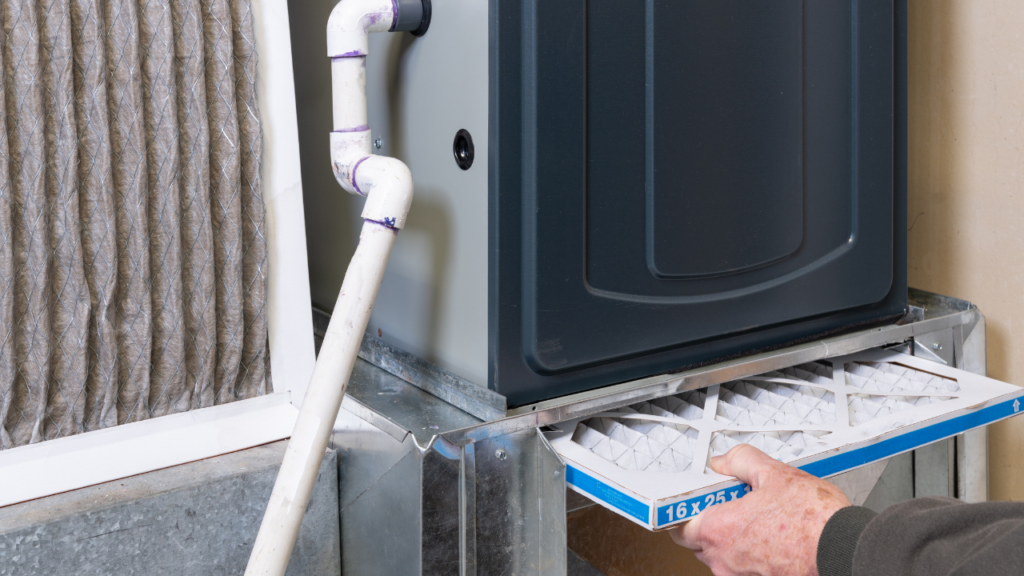
Start by locating your filter. It’s usually found in the return air duct near the furnace, or in a slot on the furnace unit itself. Turn the system off before you pull the filter out.
Hold the filter up to a light source. A new filter looks white or light grey and you can see light through it easily. A filter that needs replacing will look dark, visibly clogged, and won’t let much light through. If you’re unsure, it’s generally better to replace it than leave it in.
When you put the new filter in, check the arrow on the frame – it should point toward the furnace, in the direction of airflow.
According to Canada Mortgage and Housing Corporation, good filter maintenance is one of the most effective steps homeowners can take to improve indoor air quality – which matters especially in tighter, well-insulated homes.
What Happens If You Don’t Change Your Filter
Skipping filter changes might seem harmless in the short term, but the consequences build up quickly.
Higher energy bills. A clogged filter forces your furnace to work harder to pull air through, which uses more electricity or gas and drives up your monthly costs.
Reduced heating performance. When airflow is restricted, your furnace can’t distribute heat effectively. Rooms may feel cooler than they should, and the system takes longer to reach the set temperature.
Overheating and safety shutoffs. Severely restricted airflow can cause the heat exchanger to overheat, triggering the system’s safety shutoff. You may find your furnace turning on and then shutting off shortly after – a sign something isn’t right.
Increased wear and tear. Running harder than it needs to puts stress on the blower motor and other components, shortening the life of the system.
Poorer indoor air quality. An overloaded filter stops doing its job effectively. Dust and particles that should be captured start circulating through your home instead.
Taking care of your filter is one part of a broader approach to keeping your system in good shape. Our HVAC maintenance service covers a full system inspection and tune-up – a good complement to the regular filter changes you’re doing yourself.
A Small Habit With a Big Payoff
Knowing how often to change your furnace filter is the easy part – the key is building it into a regular routine. A quick monthly check, with a replacement every one to three months for most homes, is all it takes to keep your furnace running efficiently and your air clean.
If you’re unsure what filter is right for your system, or if your furnace hasn’t been serviced in a while, Westisle Heating & Cooling is here to help. We’ve been keeping homes across Duncan and Vancouver Island comfortable since 1989 – and we’re always happy to answer a straightforward question.
Get in touch with our team today if you’d like a hand with your furnace or heating system.
Frequently Asked Questions
How often to change furnace filter in a typical home?
For a standard 1-inch filter, every one to three months is the general guideline. Homes with pets, allergies, or multiple occupants may need to change it more frequently – sometimes every four to six weeks.
What happens if I leave a dirty filter in too long?
A clogged filter restricts airflow, causes your furnace to work harder, drives up energy bills, and can lead to overheating and system shutdowns. Over time it also puts more wear on the blower motor and other components.
What MERV rating should I use for my furnace filter?
For most homes, a MERV 8 filter strikes a good balance between air quality and airflow. Homes with allergy sufferers or pets may benefit from a MERV 11 or 12. Avoid going too high without checking with a technician first – very high MERV ratings can restrict airflow more than some systems can handle.
Can I clean and reuse my furnace filter?
It depends on the type. Some filters are designed to be washed and reused – check the manufacturer’s instructions. Most standard disposable filters should simply be replaced rather than cleaned, as washing them can damage the fibres and reduce their effectiveness.
Does changing the filter more often save money?
Yes, in the long run. A clean filter keeps your furnace running efficiently, which reduces energy consumption and prevents the kind of wear that leads to costly repairs.
How do I know what size filter my furnace needs?
The size is usually printed on the frame of your existing filter. If you’re not sure, check your furnace manual or give your HVAC technician a call – they can confirm the right size and type for your system.